What "product-free" means here
By product-free editorial we mean visual stories that are not built to sell a commercial item: a profile of a bakery owner's working morning, a photo essay on a river at different seasons, a magazine feature about a choir, a self-published zine about your neighbourhood. The subject is a person, a place, a community, a mood or an idea. No item needs a hero shot, no packaging needs to face the camera.
That freedom has a cost. Without a product, a story can drift. The answer is structure: a small set of story slots that every edit needs, decided before you shoot.
The seven story slots
Picture magazines have long relied on similar roles. W. Eugene Smith's "Country Doctor" essay for Life in 1948 moves between establishing scenes, intimate portraits, working details and a quiet closing image of the doctor after surgery. The slots below are a practical version of that structure.
| Slot | Job in the story | Priority | Example (product-free) | Done |
|---|---|---|---|---|
| Opener | Sets mood and promise | Must | Baker silhouetted against the oven glow at 4 a.m. | ☐ |
| Establishing | Shows where we are | Must | Street corner with the shop's lit window | ☐ |
| Character portrait | Gives the story a face | Must | Direct portrait, flour on the apron | ☐ |
| Detail pair | Texture and evidence | Should | Worn wooden peel; handwritten order book | ☐ |
| Action | Energy and process | Should | Dough thrown on the bench, motion blur | ☐ |
| Interlude | Pause and breath | Could | Empty stool, steam in morning light | ☐ |
| Closer | Resolution or question | Must | Owner locking up as the street wakes | ☐ |
Notice that every example is about people and place; nothing in the list is a product being advertised. If you find yourself writing "bread on white background", you have slipped into commercial territory — useful work, but a different brief.
Variety in the sequence
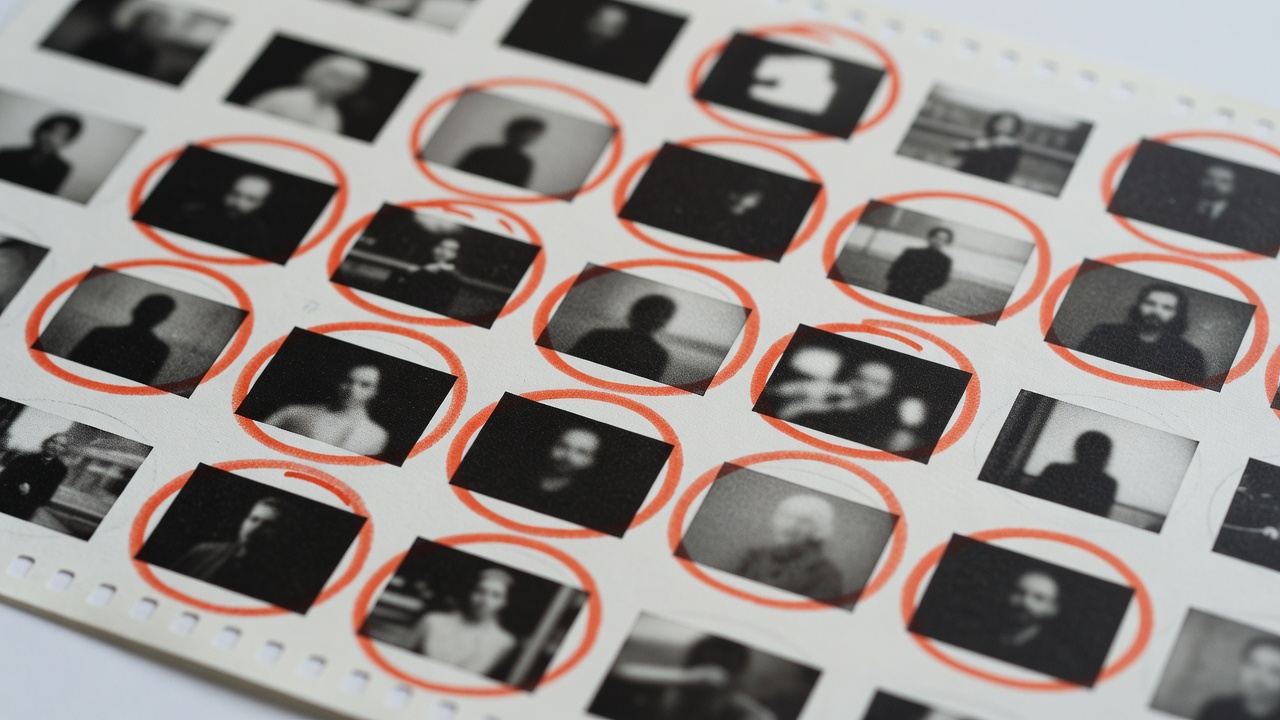
Editors look for change in scale, angle and rhythm. When you plan, mark each slot with an intended distance (wide, medium, close) and orientation (horizontal or vertical). A layout designer can then pair a vertical portrait with a horizontal scene. The book Magnum Contact Sheets, edited by Kristen Lubben, shows how photographers worked around a subject before the final frame appeared — a good reminder to shoot each slot more than once.
Planned in advance
- The seven slots and their order
- Access times and who to ask
- Light for opener and closer
- Captions information: names, roles, places
Left open on purpose
- Which gesture becomes the action frame
- Interludes you notice while waiting
- A detail you could not have predicted
- A better closer than the one you planned
Creative and personal projects

A personal project lasts weeks or years, so the plan works differently. Instead of a single shot list, write a project question — "How does my street change between first light and last bus?" — and a small set of constraints: one lens, one season, black and white only, or colour like Saul Leiter's layered New York street scenes. Constraints focus your eye and make the eventual sequence feel coherent.
- Write the questionOne sentence that tells you what belongs and what does not.
- Set constraintsFormat, lens, palette or time of day.
- Schedule sessionsRegular dates in the calendar, treated like client work.
- Review every few weeksPrint small, pin them up, note the gaps as new rows.
- Sequence toward an outputA zine, exhibition, portfolio page or online essay.
Captions and context
Editorial work needs accurate captions. Record names, spellings, locations and dates on your list as you go. In the edit, add this information to IPTC metadata fields so it travels with the files. A strong image with a wrong name in the caption is a problem for every publication that runs it.